

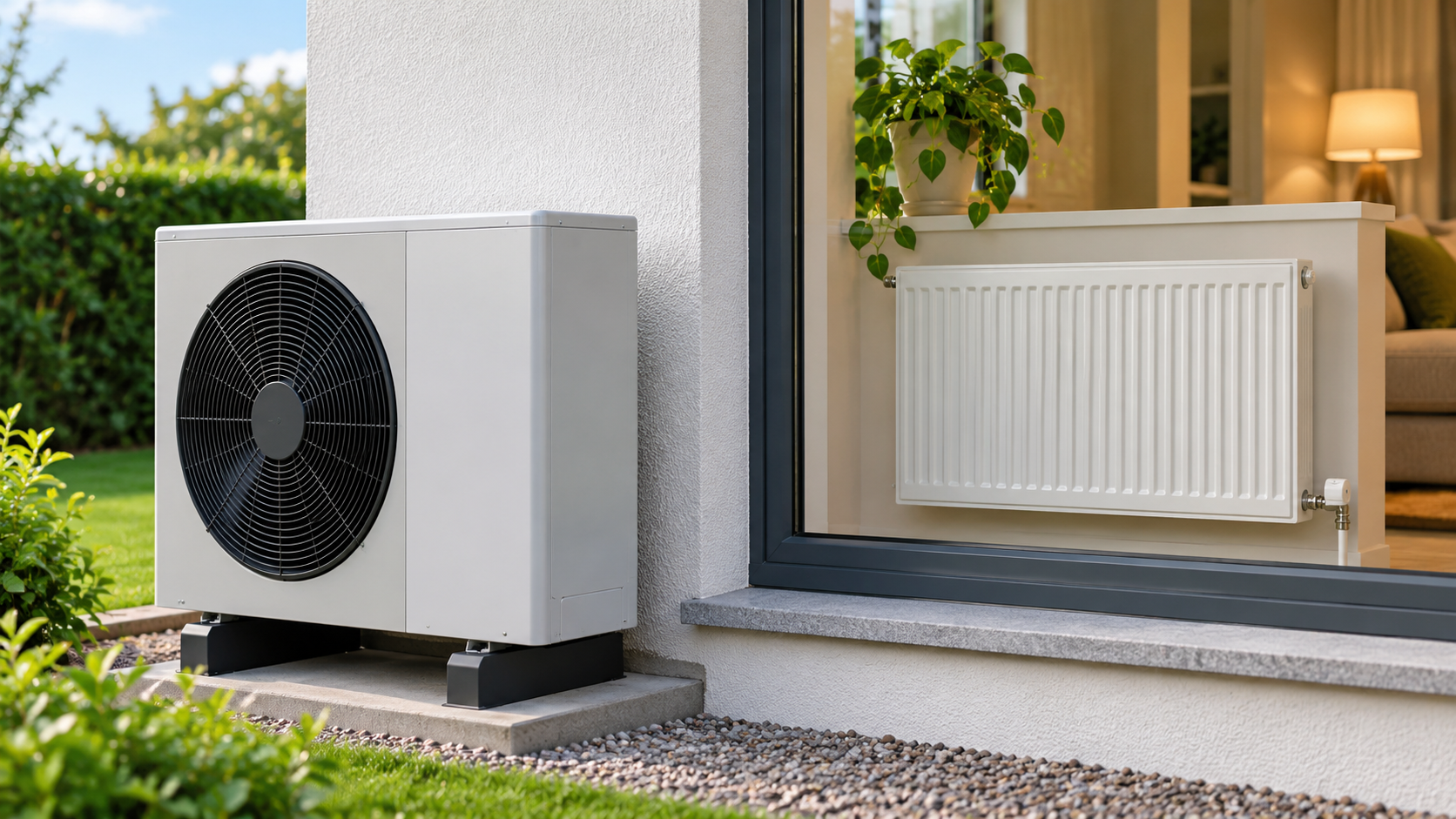
If you’re considering installing a heat pump in your home, one of the first questions you might have is whether you’ll need to replace all your existing radiators.
It’s a common concern among Irish homeowners, particularly those looking to upgrade from a traditional gas or oil boiler. Replacing radiators throughout a property can add to the overall cost of a retrofit, so it’s understandable that homeowners want to know whether their existing heating system can be retained.
The good news is that you don’t always need to replace your radiators when installing a heat pump. However, whether your current radiators are suitable depends on several factors, including their size, your home’s insulation levels and the temperature required to heat each room effectively.
In this guide, we’ll explain how heat pumps work with existing radiators, when replacements might be necessary and what Irish homeowners should consider before making the switch.
How Does a Heat Pump Work With Radiators?
Heat pumps work differently from traditional gas or oil boilers.
A conventional boiler typically heats water to around 60–75°C, allowing relatively small radiators to deliver plenty of heat into a room.
Air-to-water heat pumps, on the other hand, are generally most efficient when operating at lower water temperatures, often around 35–50°C, depending on the system and property.
This means that while your existing radiators may work perfectly well with a boiler, they might not provide enough heat when connected to a lower-temperature heat pump system.
The key difference isn’t necessarily the type of radiator you have, but whether it’s large enough to heat your room effectively at a lower water temperature.
Can You Keep Your Existing Radiators When Installing a Heat Pump?
Yes. In many cases, existing radiators can be retained when upgrading to a heat pump.
However, a proper assessment is needed to determine whether they can deliver sufficient heat.
Several factors influence this decision.
1. The Size of Your Existing Radiators
Larger radiators have more surface area, allowing them to release more heat into a room.
If your existing radiators are already generously sized, they may be suitable for a heat pump without needing replacement.
Smaller radiators, particularly those installed in older homes, may struggle to provide enough warmth at lower flow temperatures.
In these cases, upgrading selected radiators to larger or more efficient models may be necessary.
2. Your Home’s Insulation Levels
Insulation plays a major role in determining whether your existing radiators will work with a heat pump.
A well-insulated home retains heat more effectively, reducing the amount of energy needed to maintain a comfortable indoor temperature.
If your home has good attic insulation, insulated walls, modern windows and limited draughts, your existing radiators may be more capable of meeting its heating requirements.
However, if your property loses heat quickly, the radiators may need to deliver significantly more warmth.
This is why insulation improvements are often recommended as part of a whole-house energy upgrade.
3. Your Home’s Heat Loss
Every room in your home has a different heating requirement.
For example, a large living room with several external walls and windows may require more heat than a small bedroom.
A room-by-room heat loss calculation helps determine how much heat each space requires and whether its existing radiator can deliver it at the proposed heat pump operating temperature.
This assessment is essential before deciding which radiators, if any, need replacing.
Do You Need Special Radiators for a Heat Pump?
Not necessarily.
Heat pumps can work with standard panel radiators, provided they’re correctly sized for the property’s heating requirements.
However, certain radiator types can be particularly effective with low-temperature heating systems.
| Radiator type | Heat pump compatibility |
|---|---|
| Standard panel radiators | Suitable if correctly sized |
| Double-panel convector radiators | Often a good option due to higher heat output |
| Triple-panel radiators | Can provide greater heat output where space allows |
| Low-temperature radiators | Specifically designed to work efficiently at lower temperatures |
| Fan-assisted radiators | Can deliver higher heat output from compact units |
The best option depends on the individual room, available wall space and the overall heating system design.
You don’t automatically need specialist radiators to install a heat pump. In many homes, appropriately sized conventional radiators can perform very well.
Will a Heat Pump Work in an Older Irish Home?
Yes, heat pumps can be installed in older Irish properties, including homes originally designed for oil or gas central heating.
However, older homes often require additional preparation to ensure the system operates efficiently.
For example, a house built in the 1960s or 1970s may have limited wall insulation, older windows and radiators sized for high-temperature boiler systems.
Installing a heat pump without addressing these issues could result in higher running costs or rooms that struggle to reach a comfortable temperature.
Depending on the property’s condition, recommended improvements may include:
-
Attic, cavity wall, external wall or internal wall insulation
-
Upgrading selected radiators
-
Improving airtightness and ventilation
-
Replacing inefficient windows or doors where necessary
-
Upgrading heating controls and pipework
The objective is to reduce the home’s heat demand before designing a heating system that can meet it efficiently.
How Much Does It Cost to Replace Radiators for a Heat Pump in Ireland?
The cost of replacing radiators depends on how many need upgrading, their size and the amount of plumbing work required.
As a broad indicative guide, replacing a standard radiator might cost approximately €250–€600 per radiator, including straightforward installation. Larger radiators, specialist models or installations requiring significant pipework changes can cost more.
However, it’s important to remember that you may not need to replace every radiator in your home.
For example, following a heating assessment, you might discover that the radiators in your bedrooms are suitable, while those in your living room and kitchen need upgrading.
Replacing only the radiators that are undersized can help reduce unnecessary costs.
These figures are illustrative rather than a quotation, and a full heating system assessment is needed to establish accurate costs.
Are There SEAI Grants Available for Heat Pumps and Radiators?
Yes. The Sustainable Energy Authority of Ireland (SEAI) provides financial support for eligible homeowners installing heat pumps.
Depending on the grant route and current scheme requirements, funding may also support associated heating system upgrades, including eligible radiator and pipework improvements.
For homeowners considering a comprehensive energy retrofit, working with an SEAI-registered One Stop Shop such as House2Home can simplify the process.
A One Stop Shop coordinates the relevant energy upgrades, manages eligible grant applications and deducts applicable grants from the cost of the works.
This can be particularly beneficial when combining a heat pump installation with insulation, windows, doors or solar PV.
Grant amounts and eligibility conditions can change, so it’s important to confirm the latest SEAI requirements before proceeding.
Is Underfloor Heating Better Than Radiators for a Heat Pump?
Underfloor heating is often considered an ideal partner for heat pumps because it can operate effectively at relatively low water temperatures.
Rather than heating a room through individual radiators, underfloor heating distributes warmth across a larger floor area.
This allows it to provide comfortable heating at lower flow temperatures, which can improve heat pump efficiency.
However, installing underfloor heating in an existing home can involve lifting floors and carrying out substantial renovation work.
If you’re already planning an extension or major renovation, underfloor heating may be worth considering.
But if you’re simply upgrading your heating system, correctly sized radiators can be a practical and cost-effective alternative.
You do not need underfloor heating to benefit from a heat pump.
How Do You Know If Your Radiators Are Suitable?
The most reliable way to determine whether your existing radiators will work with a heat pump is through a professional assessment of your home.
At House2Home, we recommend starting with a Home Energy Assessment (HEA).
This helps establish your property’s current energy performance and identifies the improvements needed to achieve a more comfortable, energy-efficient home.
A detailed heating system design can then determine whether your existing radiators can be retained or whether individual units need upgrading.
This approach helps avoid unnecessary radiator replacements while ensuring your new heating system is properly designed for your property.
Can You Install a Heat Pump Without Replacing Your Radiators? The Verdict
For many Irish homeowners, the answer is yes — but it depends on your home.
If your property is well insulated and your existing radiators are large enough to provide sufficient heat at lower temperatures, you may be able to keep most or even all of them.
However, in older or less energy-efficient properties, some radiator upgrades may be needed to ensure the heat pump performs effectively.
The important thing is to assess your home properly rather than assuming every radiator needs replacing.
With the right insulation, heat loss calculations and heating system design, a heat pump can provide comfortable, efficient heating without the expense of a complete radiator replacement.
Thinking About Installing a Heat Pump in Your Home?
At House2Home, we help homeowners across Ireland improve their home’s energy efficiency through tailored retrofit solutions.
As an SEAI-registered One Stop Shop, we can coordinate everything from insulation and heating upgrades to heat pump installation, solar PV and eligible grant applications.
Our Home Energy Assessment is an excellent starting point for understanding which improvements are right for your property.
A Home Energy Assessment costs €700, with a €350 SEAI grant available to eligible homeowners, bringing the net cost to €350.
Ready to explore your options?