

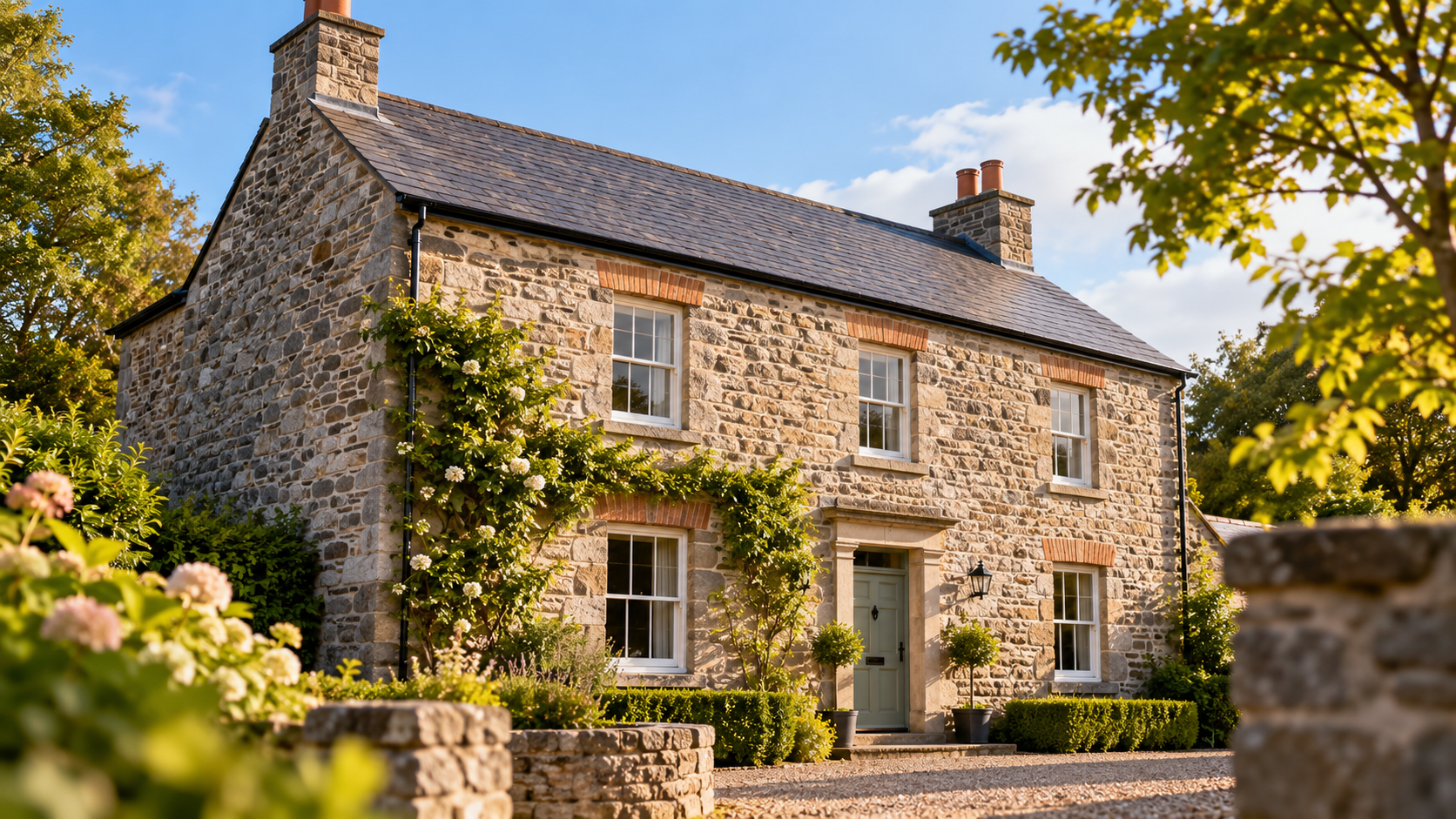
Ireland is home to thousands of beautiful older properties, from stone cottages and Victorian terraces to Georgian houses and traditional farmhouses. While these homes are full of character, making them warmer and more energy efficient can be more complicated than retrofitting a modern property.
Traditional buildings were constructed using different materials and methods, meaning a standard approach to insulation and energy upgrades isn’t always appropriate.
That’s where the SEAI Traditional Homes Pilot comes in.
The scheme allows eligible owners of traditionally constructed homes to access SEAI One Stop Shop grant support while ensuring that any energy upgrades are appropriate for the age, construction and character of the building.
House2Home is an SEAI registered One Stop Shop providing Traditional Homes services, helping homeowners navigate the process and deliver whole-home energy upgrades.
What is the SEAI Traditional Homes Pilot?
The Traditional Homes Pilot is an SEAI initiative designed specifically for traditionally constructed homes and heritage buildings.
These properties were generally built before 1940 and can behave very differently from modern homes.
Rather than simply applying modern retrofit methods to an old building, the pilot allows for a more considered approach to improving energy performance while protecting the building’s traditional fabric and heritage value.
SEAI estimates that around 270,000 homes – approximately 16% of Ireland’s private housing stock – were built before 1945, so improving the energy efficiency of these properties is an important part of Ireland’s wider retrofit programme.
What is considered a traditional home?
Age alone doesn’t necessarily determine whether a property is traditionally constructed.
According to SEAI, traditional buildings commonly feature characteristics such as:
- Solid brick or stone walls without a cavity
- Lime-based or breathable construction
- Timber or metal single-glazed windows
- Timber-framed roofs finished with slate, tiles or other traditional materials
- No damp-proof course
- Materials designed to allow moisture to move through the building fabric
If you own an older stone cottage, farmhouse, Victorian or Georgian property, or another home constructed before approximately 1940, your property may be suitable for the Traditional Homes Pilot.
Why do traditional homes need a different approach to retrofit?
Modern homes are generally designed around cavity walls, damp-proof membranes and relatively impermeable construction materials.
Many traditional homes weren’t.
Older buildings often rely on their walls and other materials being able to absorb and release moisture naturally. Using an unsuitable insulation system or modern material can interfere with this process.
That can potentially create problems with moisture, condensation or the building fabric itself.
For this reason, retrofitting a traditional home isn’t simply about installing as much insulation as possible.
The objective is to find the right balance between energy efficiency, comfort, moisture management and conservation.
The Traditional Homes Pilot provides greater flexibility so that materials and retrofit solutions appropriate to traditional construction can be considered.
Who is eligible for the Traditional Homes Pilot?
Under current SEAI guidance, you may be eligible if:
- You own a traditionally constructed home, typically built before the 1940s
- You engage a Traditional Building Professional to oversee the works
- You intend to complete a whole-house energy upgrade
- You use an SEAI registered One Stop Shop participating in the Traditional Homes Pilot
- Your property hasn’t previously received SEAI grant support for the same measures
Importantly, the scheme is designed for comprehensive home energy upgrades rather than a single standalone measure.
You should also speak to your One Stop Shop before beginning any work, as projects where the relevant works have already started may not qualify.
What is a Traditional Building Professional?
One of the key differences between a standard One Stop Shop retrofit and the Traditional Homes Pilot is the requirement for a Traditional Building Professional.
This will typically be an architect, engineer or building surveyor with suitable conservation and traditional-building experience.
Their role is to help ensure the proposed retrofit measures and materials are appropriate for the property.
The Traditional Building Professional works alongside the homeowner and One Stop Shop to develop a suitable whole-house retrofit strategy.
This additional expertise is particularly important when decisions are being made around areas such as solid-wall insulation, moisture movement, historic windows, traditional roofs and other original building features.
What energy upgrades can be included?
Traditional doesn’t mean your home can’t benefit from modern energy technology.
Depending on the property and the recommendations arising from the assessment and retrofit strategy, upgrades under the pilot can include:
- Roof and attic insulation
- Wall insulation
- Floor insulation
- Windows and doors
- Ventilation systems
- Airtightness improvements
- Heat pumps and renewable heating
- Solar PV
- Solar thermal
The exact package will vary from house to house.
A 19th-century stone cottage, for example, may require a very different insulation strategy from a brick Victorian terrace, even if both homes were constructed around the same time.
Do traditional homes have to reach a B2 BER?
This is an important difference homeowners should be aware of.
SEAI’s current Traditional Homes Pilot guidance states that a post-works BER of B or better is not a requirement of the pilot.
Instead, the focus is on carrying out significant energy upgrades that are appropriate to the building’s traditional construction and heritage value.
This recognises that aggressively pursuing a particular BER rating may not always be technically appropriate for a historic property.
The objective is to make the home warmer and more energy efficient without compromising the features and construction methods that have allowed it to perform for generations.
What grants are available for traditional homes?
The Traditional Homes Pilot provides access to One Stop Shop grant supports for eligible whole-house energy upgrades.
Depending on the property and proposed works, grant support can potentially contribute towards measures such as insulation, windows and doors, heat pumps, ventilation and renewable technologies.
The exact grant amount will depend on your property and the measures included in your retrofit plan.
One of the major benefits of using the One Stop Shop route is that the grant process is managed as part of the overall project rather than leaving the homeowner to coordinate multiple contractors and grant applications themselves.
Can you insulate the solid walls of an old house?
Potentially, but this is an area where the correct specification is particularly important.
Traditional solid walls behave differently from the cavity walls found in many newer Irish homes. The insulation system needs to take the existing wall construction and moisture behaviour into account.
This is one of the reasons the Traditional Homes Pilot requires specialist professional involvement.
A solution should be designed for the particular property rather than assuming that the same wall insulation system is suitable for every house.
Can you install a heat pump in a traditional home?
Potentially, yes.
Heat pumps are among the technologies that can be considered under the Traditional Homes Pilot.
However, installing a heat pump in an older property needs careful planning.
Before recommending one, factors such as the home’s heat loss, insulation levels, airtightness, ventilation and existing heating distribution system need to be considered.
For some traditional properties, improvements to the building fabric will therefore form an important part of preparing the home for renewable heating.
What about original windows and doors?
Replacing every original feature isn’t necessarily the best approach for a traditional property.
Where historic windows and doors contribute to the character of the building, the retrofit strategy may consider appropriate ways of improving their energy performance while retaining important original fabric.
SEAI guidance also allows qualifying secondary glazing systems to be supported through the windows grant where historic windows and doors are being retained and the relevant scheme requirements are met.
Again, the correct solution will depend on the individual building.
How does the Traditional Homes Pilot process work?
The first step is understanding the building.
Homeowners participating in the pilot need to engage a suitable Traditional Building Professional. You can then work with an SEAI registered One Stop Shop offering Traditional Homes services, such as House2Home.
The Traditional Building Professional and One Stop Shop work together to develop an appropriate whole-house retrofit strategy.
This considers the existing construction, condition and energy performance of the property before determining which improvements are appropriate.
Once the scope has been agreed and the project meets the relevant requirements, the One Stop Shop can manage the energy upgrade process and SEAI grant application.
Why use a One Stop Shop for a traditional home retrofit?
Retrofitting any house involves coordinating multiple elements.
With a traditional property, that coordination becomes even more important.
There may be insulation specialists, heating installers, ventilation contractors, window suppliers and other trades involved, alongside the Traditional Building Professional.
Using an SEAI registered One Stop Shop provides a central point for managing the energy upgrade.
House2Home can help coordinate the retrofit process, including the assessment, grant application, contractors, works and final BER, while working alongside the Traditional Building Professional to ensure the proposed measures are suitable for the property.
Can a traditional home really become warmer and more energy efficient?
Absolutely.
Owning an older property doesn’t mean accepting cold rooms, draughts and high energy bills.
The key is taking the right approach for the building.
A well-planned retrofit can significantly improve comfort and energy performance while respecting the character and construction of the original home.
For Ireland’s traditional housing stock, that balance is particularly important.
Thinking about retrofitting a traditional home?
If you own a traditional or pre-1940 home and are considering an energy upgrade, House2Home can help you explore whether the SEAI Traditional Homes Pilot could be suitable for your property.
As an SEAI registered One Stop Shop providing Traditional Homes services, we can help guide you through the energy upgrade process and work alongside your Traditional Building Professional to develop an appropriate retrofit strategy.
Every traditional home is different, so the first step is understanding your property and what you’re hoping to achieve.
Get in touch with House2Home to discuss your traditional home retrofit and the SEAI supports that may be available.
👉 Calculate Your Home Energy Upgrade Cost
If you’d rather speak to the House2Home team about your property and the retrofit process, you can also book a free 30-minute call: